


The Iranian shores and the island of Qeshm in the Strait of Hormuz. (Photo/Reuters)
While the world watches oil prices and tanker traffic, a quieter shock is building in the global fertilizer market. One that could mean smaller harvests and more expensive food later this year.
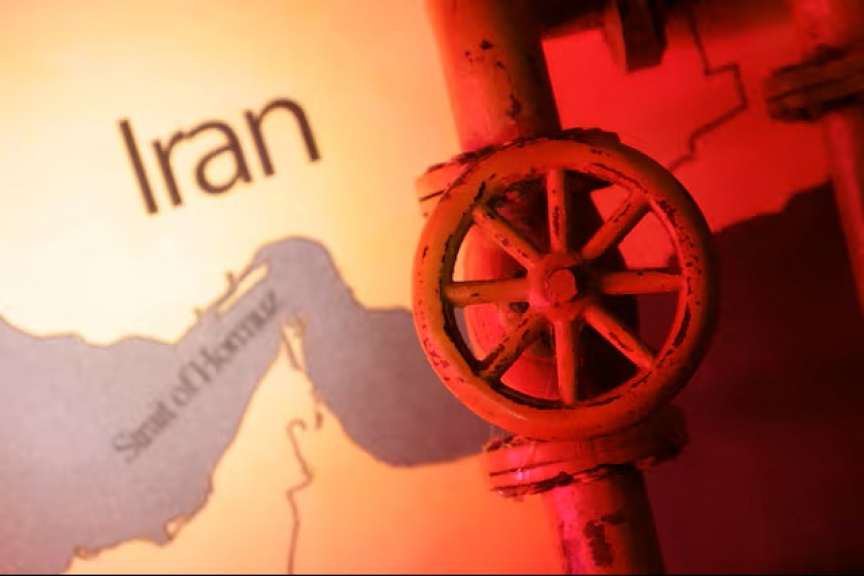
The war involving Iran, the United States and Israel has turned the Strait of Hormuz into the world’s most dangerous shipping lane. Most headlines frame this as an oil and gas story. It is, but that’s only half the picture.
About one‑third of global seaborne fertilizer trade typically passes through the Strait of Hormuz. This is not just any fertilizer: Gulf producers are major exporters of nitrogen fertilizers such as ammonia and urea, which modern agriculture depends on to sustain current crop yields.
The chemistry is simple but brutal in its implications: natural gas is turned into ammonia, and ammonia into urea, the most widely used nitrogen fertilizer on earth. Without that chain, harvests of wheat, rice, maize and other staples fall sharply. One estimate often cited in agricultural economics is stark: without synthetic nitrogen fertilizers, roughly half of today’s global population could not be fed.

When a conflict chokes off that chain at its maritime chokepoint, it stops being just an energy story. It becomes a food story.
On 1 March, QatarEnergy declared force majeure on liquefied natural gas (LNG) deliveries, suspending obligations on tens of millions of tonnes of exports a year to Europe and Asia. LNG is not only a fuel, it is also the feedstock that powers fertilizer plants from India and Pakistan to Egypt.
Analysts note that Gulf states such as Qatar, Saudi Arabia and the United Arab Emirates have built enormous ammonia and urea production capacity precisely to export to the world. When LNG flows and shipping lanes are disrupted, two things happen at once:
The result is a global squeeze: less fertilizer available, and higher production costs where plants can still run.
Benchmark urea prices have already jumped sharply, Carnegie Endowment analysis puts the rise at around 30 percent in a single month. Other market indicators, such as the New Orleans urea index in the United States, have also spiked as traders price in prolonged disruption.

Oil shocks are visible. Prices at the pump change within days. Fertilizer shocks are delayed, and that’s what makes them dangerous.
Farmers don’t buy fertilizer every week. In the Northern Hemisphere, the critical window is spring planting: roughly March–April 2026. That is when American, European, Indian and many other farmers lock in their fertilizer purchases for the season.
If a third of globally traded fertilizer is suddenly constrained at the Strait of Hormuz just as that buying season begins, farmers are forced into ugly choices:
Those decisions don’t show up in our lives tomorrow. They show up at harvest.
A crop planted in April is harvested around September. That is when lower yields and higher production costs begin to filter into wholesale markets, then into retail prices. By the time your grocery bill jumps, the causal chain runs back six months, to a shipping gridlock in a narrow strait and a force majeure notice most people never heard of.
Economists and food‑security experts are already warning that the fertilizer angle could reignite global food inflation just as many countries were finally seeing some relief after the COVID‑era and Ukraine‑war shocks.
The mechanism is straightforward:
Analysts told CNBC that disruptions through Hormuz could feed through to “higher farming costs, reduced crop yields and ultimately more expensive food,” with particular risk for food‑import‑dependent countries and regions such as parts of sub‑Saharan Africa and the Gulf itself.
Unlike oil, global food systems have thinner buffers. Grain stocks, storage capacity and humanitarian budgets were already strained by previous crises. A simultaneous hit to fertilizer and energy in a key planting window is exactly the kind of compound shock that can push vulnerable households over the edge.

The impact will not be evenly distributed.
For small farmers, especially in developing countries, the choice may be brutal: use less fertilizer and risk a poor harvest, or take on more debt to buy inputs at inflated prices. For governments, the pressure will show up in subsidy budgets, food‑import bills and, in some cases, political stability.

Oil is easy to explain. A price per barrel, a photo of a tanker, a chart on a TV screen.
Fertilizer is harder. It sits at the intersection of chemistry, maritime logistics, energy markets, agricultural economics and household budgets. To see the full picture, you have to read LNG contracts, shipping data, fertilizer price indices and farm reports at the same time.
That complexity is exactly why the fertilizer shock is under‑reported, and why it matters that someone connects the dots now, not in September when the grocery bill arrives.