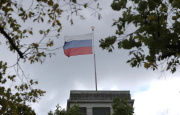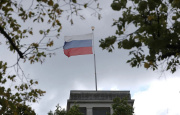



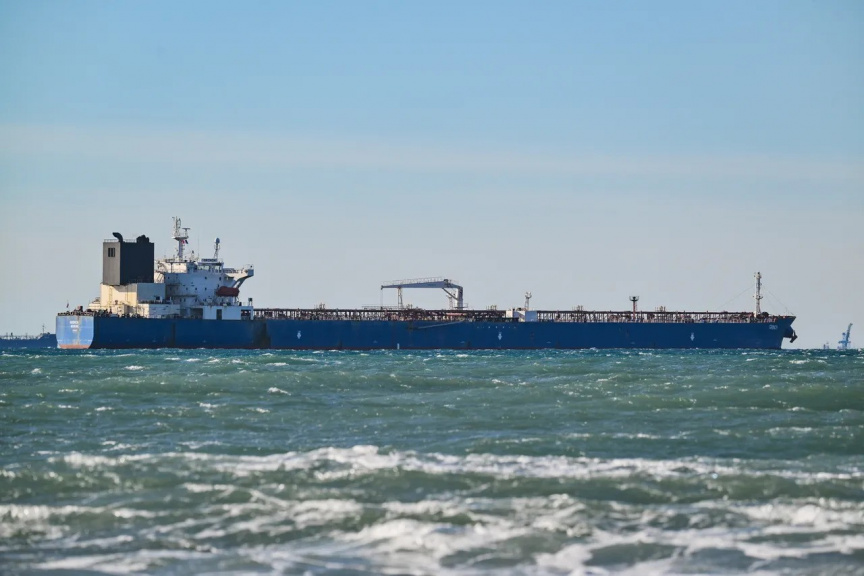
Moscow said on Friday that the global energy market "cannot remain stable" without its oil, piling pressure on Washington to lift more sanctions. (Photo/AP)
Moscow said on Friday that the global energy market "cannot remain stable" without its oil, piling pressure on Washington to lift more sanctions as the Middle East war strangles supplies.
The United States has eased some oil sanctions on Russia imposed over its war on Ukraine, prompting backlash from Western allies who urged Washington to keep up restrictions as the Ukraine conflict drags into its fifth year.
The US-Israel strikes on Iran and Tehran's retaliatory attacks across the Gulf region have upended the world's energy and transport sectors, virtually halting activity in the strategically vital Strait of Hormuz.
The United States is temporarily allowing the sale of oil from Russia — one of the world's largest oil producers and exporters — that is at sea, the Treasury Department said on Thursday, as nations scrambled to boost supply and bring down prices.
Oil prices soared to almost $120 a barrel this week, the highest price since the pandemic.
G7 resistance
Russia's economic envoy Kirill Dmitriev said on Friday that it was "increasingly inevitable" that Washington would lift more sanctions.
"The United States is effectively acknowledging the obvious: without Russian oil, the global energy market cannot remain stable," Dmitriev posted on Telegram.
"Amid the growing energy crisis, further easing of restrictions on Russian energy sources appears increasingly inevitable, despite resistance from some in the Brussels bureaucracy," he added.
But French President Emmanuel Macron, whose country holds the rotating presidency of the Group of Seven advanced economies, said that the Strait of Hormuz's shutdown "in no way" justified lifting the sanctions on Russia.
"The consensus was that we should not change our position on Russia and should maintain our efforts on Ukraine," Macron said after a video call with other G7 leaders discussing the economic fallout from the US-Israeli war with Iran.
Russian oil allowed
On Thursday, the US Treasury issued a licence authorising the delivery and sale of Russian crude oil and petroleum products that have been loaded on vessels on or before 12:01 am Eastern Time (0401 GMT) March 12, through 12:01 am (0401 GMT) on April 11.
The move came after Washington last week temporarily allowed Russian oil that was stranded at sea to be sold to India.
Treasury Secretary Scott Bessent insisted that the India authorisation was a "narrowly tailored, short-term measure."
He said in a statement it would not provide "significant financial benefit to the Russian government, which derives the majority of its energy revenue from taxes assessed at the point of extraction."
Dmitriev said earlier this week he had joined a "productive meeting" with US negotiators in Florida, the first talks between Moscow and Washington since the start of the Iran war.
___
Source: TRT