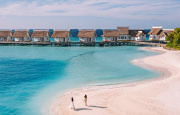



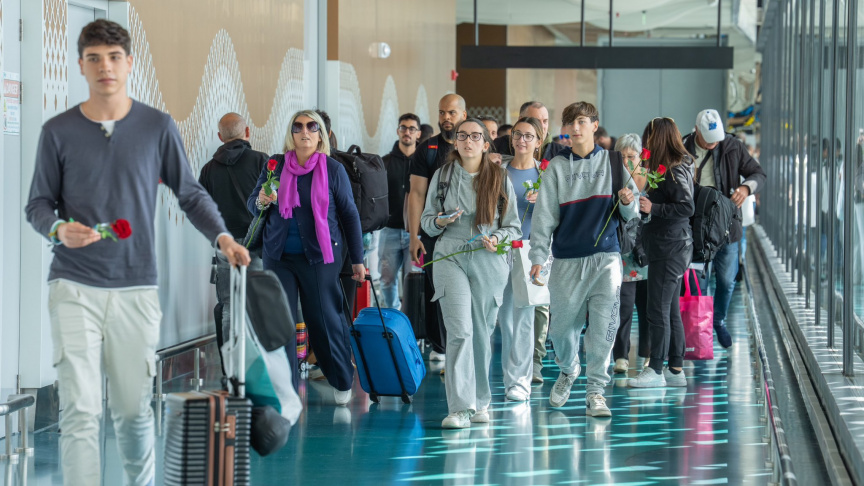
Tourists at the new international passenger terminal at Velana International Airport (VIA) on December 5, 2025. (Photo/MACL)
Tourism Minister Thoriq Ibrahim has announced plans to introduce two new visas to boost the duration of stay by tourists, in an attempt to mitigate the impact of the decline in arrivals as air corridors in the Middle East remain partially closed amid the US-Israeli war on Iran.
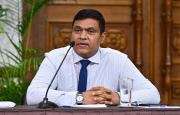
At a press conference held on Sunday afternoon by the special cabinet committee established to mitigate the war’s impact on the Maldives, Thoriq said that the government plans to introduce measures to increase the duration of stay by tourists, including by offering more convenient arrangements to extend the 30-day on-arrival visa that tourists currently receive.
Thoriq said the government is also working on introducing a remote working visa and a content creator visa.
“If we can look into how remote workers can come to the Maldives and work from here, and especially if guesthouses are able to bring in more remote workers and content creators, then it will boost their occupancy,” he said.

Thoriq noted that many of the tourists who visit the Maldives depend on key transit hubs in the Middle East. He said that the conflict in the region has plummeted tourist arrivals to the Maldives by around 21 percent since the beginning of March.
Thoriq said that the Maldives needs to diversify its tourism sector in order to mitigate the current situation, with the government preparing to introduce sports fishing, big game fishing, and technical and recreational diving in order to attract a more diverse range of travelers.
“Sports fishing and spear fishing has been banned for the last 40 years. But we plan to permit this,” he said.
Thoriq said the government also plans to expand halal tourism, bring in chartered superyachts, and offer incentives to researchers.