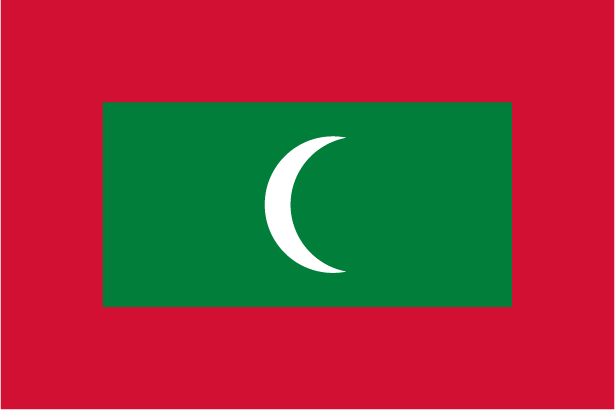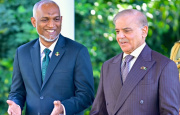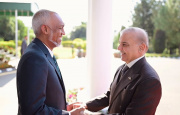


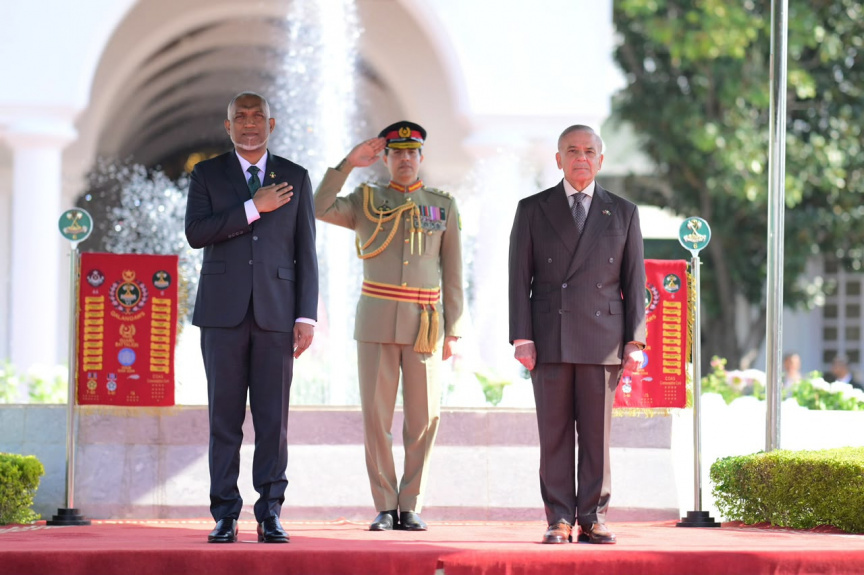
Maldivian President Dr. Mohamed Muizzu (L) and Pakistani Prime Minister Shehbaz Sharif (R) in Islamabad, Pakistan, on October 21, 2026. (Photo/President's Office)
Maldivian President Dr. Mohamed Muizzu was accorded a ceremonial welcome in Islamabad on Wednesday, marking the official commencement of his state visit to Pakistan.
The ceremony took place in the morning at the Prime Minister House, located on Constitution Avenue in the Red Zone of Islamabad.
President Muizzu, who is on a three-day state visit, was welcomed by Pakistani Prime Minister Shehbaz Sharif.
The ceremony commenced with a gun salute, after which President Muizzu inspected the guard of honor presented by the Pakistani forces.

Following the honors, the two leaders took part in the introduction of delegations.
During this segment, President Muizzu was introduced to Pakistan’s cabinet ministers and senior government officials, while members of the Maldivian delegation were introduced to PM Sharif.
President Muizzu’s visit marks the first high‑level engagement between Maldives and Pakistan in a decade, and coincides with the 60th anniversary of diplomatic relations between the two countries.

The last time a Maldivian president visited Pakistan was in May 2015, when the then-President Abdulla Yameen Abdul Gayoom travelled to Islamabad.
During the visit to Islamabad, President Muizzu is scheduled to hold separate meetings with Pakistani PM Sharif and President Asif Ali Zardari, and engage in high-level discussions between the two countries.

The discussions will primarily focus on bolstering bilateral relations, trade and economic cooperation, reviewing regional developments, and reviving the South Asian Association for Regional Cooperation (SAARC), as well as strengthening cooperation on multilateral platforms such as the United Nations (UN) and the Organization of Islamic Cooperation (OIC).
Maldives and Pakistan are also expected to sign around a dozen cooperation agreements, including one on establishing direct flights between the two countries, and expanding cooperation in healthcare, defense, education, finance, technology, tourism and climate change.