

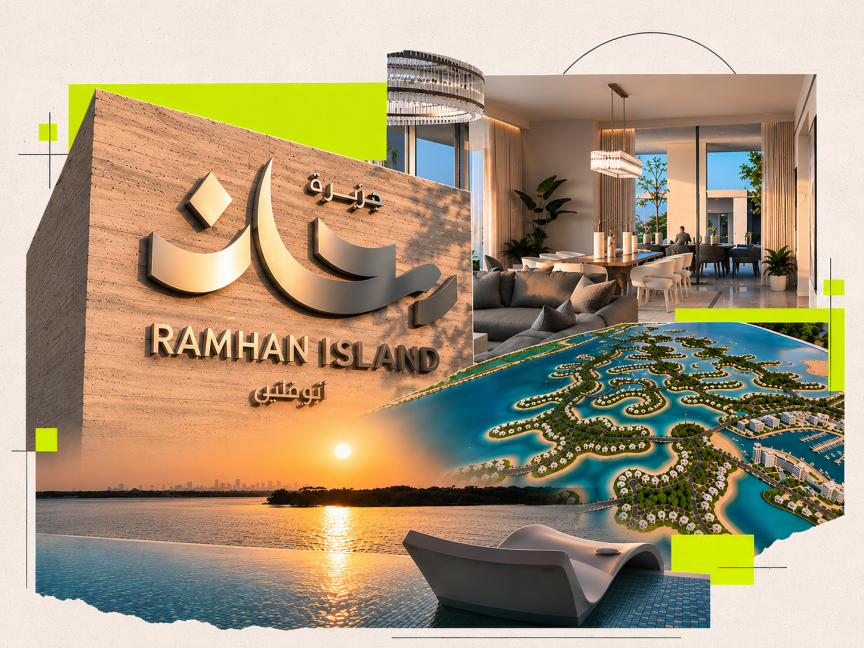
Before visiting Ramhan Island, located off the coast of Abu Dhabi, the information available suggested it was a cluster of secluded islands accessible only by sea. However, during a visit by a Maldivian media delegation, the scene changed abruptly as their vehicle entered a vast, bustling construction site. The reality was starkly different; the island is seamlessly connected to mainland Abu Dhabi via bridges, making it a mere 15-minute drive from Abu Dhabi International Airport.
Launched three years ago, this project spans a 400-hectare natural island situated between Saadiyat Island and Yas Island. Currently, approximately 200 hectares are undergoing rapid development. The developer, Eagle Hills, was founded in 2014 by Mohamed Alabbar, the visionary behind Dubai’s renowned Emaar Properties. The company has a proven track record of managing world-class mega-projects, including Marassi Al Bahrain and the Belgrade Waterfront in Serbia.

Work Pace and Investor Capability
The most striking aspect of the visit was the remarkable speed of development. Thousands of workers are engaged across various sectors of the island without pause. While overhead bridges and road networks are being constructed in some areas, others are dedicated to the structural development of luxury villas. A significant number of beach villas have already been completed within a short timeframe. These efforts reflect the investor’s substantial financial capacity and unwavering commitment to project delivery.

The Connection to Rasmalé
This project has garnered significant interest from Maldivians because Eagle Hills has been entrusted with the Maldives Waterfront and Marina Project at Rasmalé—the largest foreign investment in Maldivian history. Maldivian Infrastructure Minister Dr. Abdulla Muthalib has described this as a transformative economic shift for the Maldives.
There are several architectural parallels between Ramhan Island and the Rasmalé project. Ramhan’s master plan, featuring over 1,800 luxury villas, 900 marina residences, and a 120-room hotel, mirrors the components envisioned for the Rasmalé Waterfront. Notably, the Rasmalé project is larger in scale, covering 500 hectares compared to Ramhan’s 400.
The media delegation had the opportunity to tour mockup villas on Ramhan Island, which showcase high-end interior design, private pools, spacious living areas, and modern kitchens. These residences offer an ambiance comparable to elite Maldivian resorts, specifically targeting the high-net-worth market.

While Ramhan is primarily a commercial venture for the affluent, the first phase of the Rasmalé project includes the development of 5,000 social housing units in Hulhumalé, offering significant housing prospects for the general public. Furthermore, while Ramhan is a natural island, Rasmalé is reclaimed land. Eagle Hills has stated that no further reclamation will occur at Rasmalé, emphasizing a commitment to environmental principles.
Challenges and Expectations
Executing a project of such magnitude in the Maldives will present challenges, including securing necessary financing, managing a large workforce, and navigating the logistics of maritime transport. Meticulous planning is essential to replicate the developmental speed seen at Ramhan Island within the Maldives.
The progress visible at Ramhan Island reinforces the aspirations held for Rasmalé, demonstrating Eagle Hills’ capability as a developer. However, the ultimate success of the Rasmalé project will depend on the full implementation of agreements and the tangible benefits it brings to the Maldivian people.
The national hope is that Rasmalé will transcend being a luxury commercial venture, serving instead as a long-term solution to the housing and foreign exchange challenges, while elevating the Maldivian economy to new heights.