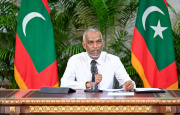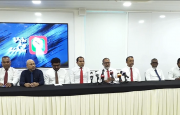


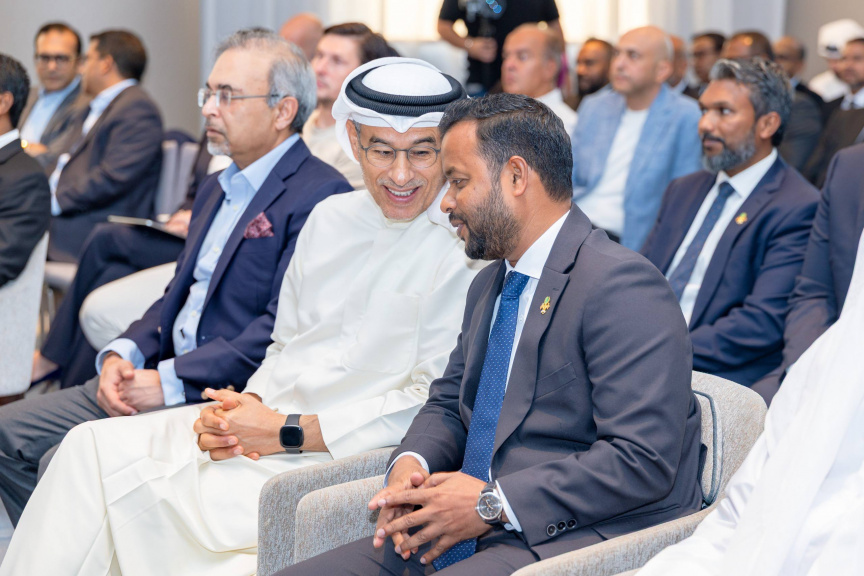
Maldives Housing Minister Dr. Abdulla Muthalib and Eagle Hills' Founder and Chairman Mohamed Alabbar converse with each other at the signing of the Maldives Waterfront and Marina Project on September 21, 2026. (Photo/Housing Ministry)
The sale of alcohol and pork as well as gambling will remain banned even in tourist-designated areas of Rasmale’, according to a new real estate bill proposed by the government.
The real estate bill, set to be introduced to the Parliament on Monday, is designed to pave the path for a USD 20 billion waterfront and marina project that Abu Dhabi-based real estate giant Eagle Hills plans to run in Rasmale’. The bill states that even though Rasmale’ will be opened for tourism, the properties will still need to stick with Islamic principles and the country’s laws.
The bill states that the zones designated for long-term lease to foreign nationals will need to comply with Maldivian laws. It states that the zone’s security will be managed by the country’s security services and that Maldivian state institutions will be represented at the zones.
The bill states that gambling and other acts in contravention of Islamic sharia and the country’s laws will be prohibited in the zones, adding that alcohol and pork will also be prohibited at tourist establishments there.
Tourist establishments will be issued license and permits under the Tourism Act, states the bill.
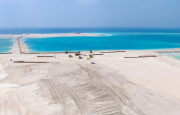
On September 21, Eagle Hills signed a commercial terms agreement or letter of intent for a mega project to develop a new integrated island destination in Rasmale’, including international hotels and resorts, premium and branded residences, a world-class marina, waterfront promenades, restaurants, shops, leisure and wellness centers.
Eagle Hills is set to receive 500 hectors of land for 99 years from Rasmale’ for the development - described by the Maldives government as one of the most ambitious development initiatives in the country’s history.
According to the Maldives government, preliminary economic impact estimates indicate the project could attract more than USD 30 billion in gross foreign investment over its lifetime, including about USD 18 billion in net foreign investment in the Maldives.
It is also expected to create more than 54,000 direct and indirect jobs. At full maturity, the destination is expected to attract more than one million visitors annually and generate more than USD 2 billion in annual tourism revenue.
However, the main opposition Maldivian Democratic Party (MDP) has expressed concerns over the project, demanding the government to publicly disclose all details of its agreement with Eagle Hills.