


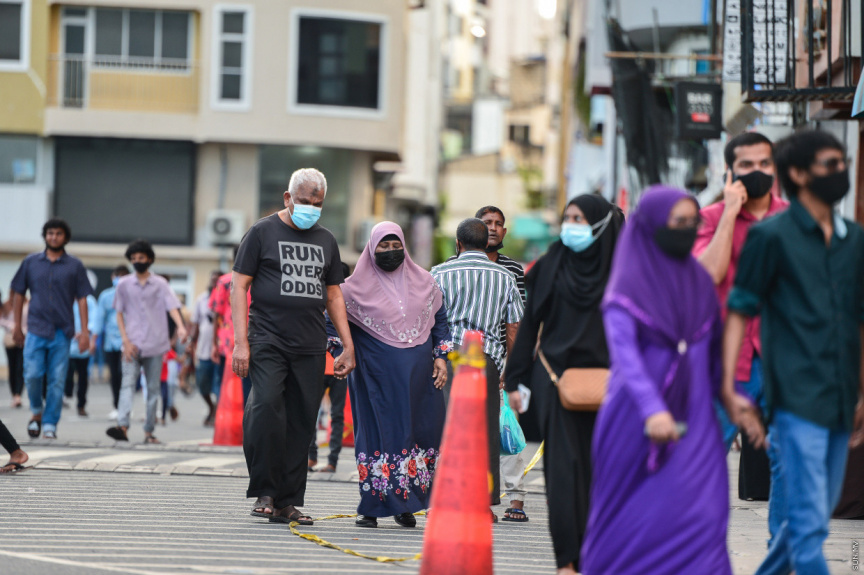
People wear masks as they walk along a street in Male' City. (Sun Photo/Fayaz Moosa)
The air quality has begun to improve over a large part of the Maldives, but remains unhealthy in the north, according to data shared by IQ Air.
The current air quality in the Maldivian capital Male’ was recorded at an Air Quality Index (AQI) of 82, which falls within the “yellow alert” or “moderate” category. This indicates the air quality is acceptable for most people, but unusually sensitive individuals such as people with respiratory or heart conditions may experience mild symptoms if exposed for long periods.
The improvement in air quality comes after days of smothering haze, pushing the populous capital into the ‘red alert’ category, indicating unhealthy air quality that may affect the heart and lungs of the general population and worsen existing health conditions.
The air quality in the southern cities of Addu and Fuvahmulah were recorded at 92 and 75, which also falls within the “yellow” alert category, where people with respiratory disease, such as asthma, are advised to limit prolonged outdoor exertion.
However, the air quality remains in the “red alert” category in the north, with an AQI of 156 in Kulhudhuffushi City. This indicates that everyone may begin to experience health effects, with members of sensitive groups expected to experience more serious health effects.
A spokesperson from the Maldives Meteorological Service previously told Sun that the air quality was expected to improve later this week.
The Maldives experiences seasonal haze each year during the Northeast Monsoon, locally known as the Iruvai Monsoon, caused by transboundary air pollution drifting south from northern India and the Himalayan region.
But the current haze comes ahead of the Iruvai Monsoon.
The weather agency advises individuals spending extended periods outside to take necessary precautions.
Air pollution poses health risks to people of all ages, but its effects can be more severe for those with chronic illnesses. Health professionals therefore advise people with respiratory conditions, heart disease or allergies to limit outdoor activities during periods of poor air quality. Wearing face masks is strongly recommended for those who need to go outdoors.