


Did you know? Singapore’s trade-to-GDP ratio ranks among the highest in the world, standing at 320% according to available statistics. Based on International Monetary Fund (IMF) data, the country also holds the second-highest GDP per capita globally. Singapore’s port ranks as the sixth busiest in the world by cargo volume and serves as the world’s leading transshipment hub. It is an exceptionally wealthy and resilient economy. Yet, even in such a robust nation, the ongoing conflict in the Middle East has generated a sense of "anxiety." In response, Singapore is taking proactive measures to reduce costs and ensure energy security.
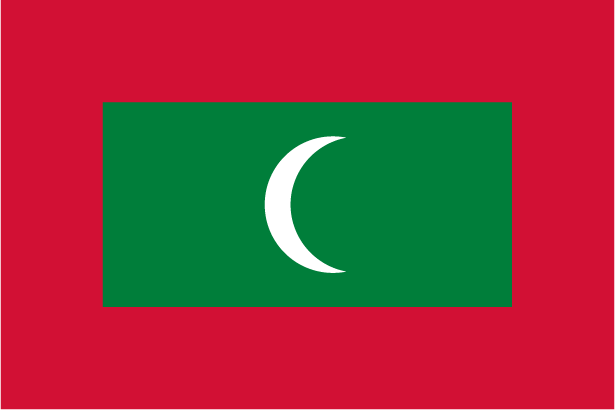
In stark contrast, the Maldives—a small nation entirely dependent on tourism and reliant on imports for both energy and basic goods—appears to be in a state of "calm." With a major election approaching, caution would be prudent. As the saying goes, "caution is the best travel companion"; without swift, nationwide measures, the country risks facing serious economic danger. Urgent action is essential to safeguard the Maldivian economy, particularly through cost reduction. Yet, while even the world’s largest economies implement multiple safeguards, the Maldivian government seems "worry-free" and remarkably calm.
The Impact of the Iran War
The war involving Iran in the Middle East has delivered a profound shock to the global economy. Following attacks on Iran by the U.S. and Israel, the Strait of Hormuz—through which 20% of the world’s oil supply passes—has become highly precarious. Consequently, crude oil prices have surged above 110 USD per barrel, representing the most severe energy crisis since the 1970s.
At this delicate situation, the Maldives is particularly at high risk. The country has no domestic production and relies entirely on tourism and imports. Since it imports 100% of its food, medicine, and fuel, rising global prices directly impact Maldivian households. There is a legitimate concern that costs for everything—from fuel, medicine, and staple foods to construction materials—will increase. Yet, unlike other nations, the Maldives has not implemented significant measures to mitigate these risks, remaining "unconcerned".

Global Responses vs Local Inaction
Major economies worldwide are responding to the Iran conflict with stringent policies. With oil and gas prices up by 39%, countries across Europe and Asia are introducing emergency measures to reduce government spending, pausing new projects, and strengthening social safety nets. Some European nations have launched campaigns to curb energy consumption. Additionally, with aviation and shipping sectors under strain, businesses are seeking ways to lower logistics costs.
To control inflation, central banks in these countries are tightening monetary policies. Global financial institutions predict that if the conflict continues, global economic growth could fall by 0.3%, while inflation may rise by 0.6%. Preparations for a potential recession are underway, including stockpiling essential goods. These actions reflect a belief that preemptive planning is the wisest approach.
Singapore’s Deputy Prime Minister Gan Kim Yong noted that prolonged conflict will elevate goods prices, affecting even their strong economy. To manage the rising cost of imports, the Monetary Authority of Singapore (MAS) is implementing policies to preserve currency value.
Maldivian Measures: Limited Only to Limiting Decorative Lights for Eid
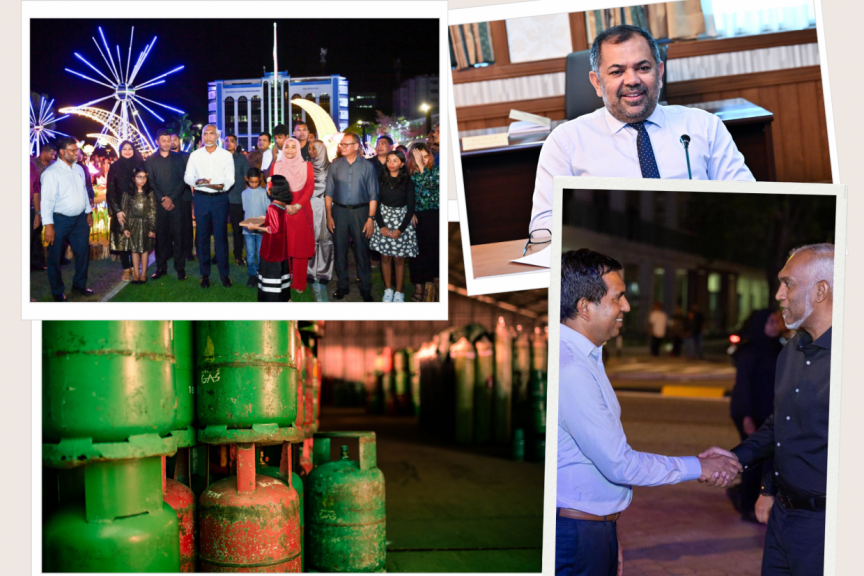
By contrast, the Maldives presents a strikingly different scenario. The government’s only announced cost-saving measure involves limiting decorative lighting for the upcoming Eid al-Fitr, restricting displays to Male’, Addu City, Fuvahmulah City, Thinadhoo City, and Kulhudhuffushi City. Compared to the scale of state spending, this represents a minimal adjustment. Economic experts argue that this is insufficient to prevent a significant economic crisis.
Moreover, the government has been reluctant to communicate the country’s economic situation to citizens, stating only that there is no cause for concern. The central bank has remained silent. The major issue lies in the lack of transparency, leaving the public uninformed.
"A difficulty that comes to the world will come to the Maldives. It will especially affect a country like the Maldives that lacks production and is solely dependent on tourism. The Middle Eastern airports, from which the most tourists come to the Maldives, are virtually at a standstill. Because of this, tourist arrivals are decreasing significantly. This will lead to a drop in income. Therefore, it will affect the Maldivian economy. That is not the government’s fault. However, the problem is the lack of transparency and trying to stay 'too cool' without taking the necessary measures," said an economic expert, speaking on condition of anonymity.
Shortly after claiming that the Maldives has sufficient fuel reserves, the government raised fuel prices for the public following global market increases. Through STO, the state’s primary fuel importer, petrol rose from 13.50 MVR to 16.01 MVR per liter, and diesel from 13.92 MVR to 17.54 MVR per liter. STO disclosed these changes proactively. However, in the same week, STO raised fuel prices for businesses to unprecedented levels without prior public announcement, prompting an increase in public transport fares. Later, the government intervened to lower fuel prices for public transport. Meanwhile, Maldives Gas began distributing 10kg cylinders with reduced quantities without proactively informing consumers; journalists discovered the discrepancy.
The Election Shadow
Critics argue that the government’s reluctance to adopt firm economic measures is tied to the upcoming vote on whether to hold Local Council and Women’s Development Committee elections simultaneously. The financial burden of these elections during economic hardship may deter the government from implementing necessary measures that could affect citizens before the vote. Concealing economic realities to gain political advantage is a common practice among political parties.
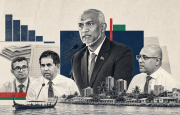
Consequently, senior officials, including Economic Minister Mohamed Saeed, continue to assert that there is no economic anxiety, projecting an image of stability despite major global economic shifts. Experts warn that misrepresenting the economic situation could cause long-term damage. Without transparency, a sudden crisis could have severe consequences.
A Time to Reduce Waste
Economic experts and opposition politicians have repeatedly urged reductions in state spending. International institutions like the World Bank and IMF have similarly advised cost-cutting as Maldives’ debt rises. Yet, the government has taken no significant action. Instead, state funds are being heavily spent in election-related campaigns. Political appointments and sudden infrastructure projects continue to inflate recurrent expenditure, exacerbating debt without generating new revenue.
Launching large-scale projects immediately before an election is a longstanding practice in the Maldives, but doing so amid global economic uncertainty is economically reckless. Without increased income, these expenditures serve only to deepen debt. Inability to control spending while foreign debt obligations grow could destabilize the financial system.
To address this precarious situation, urgent reforms are essential. Political appointments for election purposes should be curtailed, and recurrent state spending reduced immediately. Large infrastructure projects should be paused unless critical, redirecting funds to sustain the economy. Subsidies for fuel and electricity should be targeted to those most in need, rather than applied universally. In the long term, the Maldives must diversify its economy beyond tourism and develop alternative revenue streams.
If the government does not prioritize the nation’s future over short-term political considerations and implement decisive measures, the Maldives risks a deep economic crisis exacerbated by the Iran conflict. Simply refraining from lighting decorative island lights is inadequate; far more substantial actions are urgently required.