


Attorney General Ahmed Usham (R) with President Dr. Mohamed Muizzu (L). (Photo/President's Office)
The government has submitted a bill designed to enable automatic forfeiture of criminal assets.
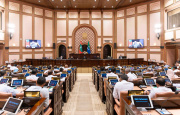
The criminal asset recovery bill, sponsored by Central Fuvahmulah MP Ali Fazad, was presented at the Parliament on Tuesday morning, and provides a legal framework for forfeiture of criminal assets, including exceptional circumstances where assets may be seized even prior to conviction.
The bill states that the state may forfeit criminal assets secured even before the provisions take effect.
Chapter 5 states that upon a criminal conviction, the Prosecutor General’s Office is empowered to seize assets via a restraint order in order to prevent any attempt to use, convert or hide it.
It also introduces automatic forfeiture of criminal assets, eliminating the need for the state to obtain a forfeiture order.
The bill lists 15 offenses where criminal asset forfeiture is allowed. They are:

The bill states that the High Court can authorize the sale of certain types of assets seized through restraint orders or civil restraint orders. They are:
According to the bill, the sale of criminal assets must be conducted either at auction or through a tendering process.
The bill also sets down the legal framework for seizure and forfeiture of criminal assets through foreign countries, and securing assistance from foreign countries to seize criminal assets obtained by foreign nationals living in the Maldives.
Presenting the bill, Ali Fazad said the purpose of the new provisions was to stop major criminals from enjoying their ill-gotten gains, and introduce a legal framework to enable the seizure of criminal assets and close all doors to gaining any additional benefit from such assets.
The bill requires the establishment of an Asset Management Authority to oversee the management, use and other-matters pertaining to forfeited criminal assets. The bill states that the authority will be established by the president and operate under the Finance Ministry, and that the authority must be independent and free from influence, political or otherwise, in fulfilling its duties and responsibilities.
The bill is also designed to establish a mechanism through the authority where victims of crimes can be compensated using money or money obtained through the sale of forfeited criminal assets.