



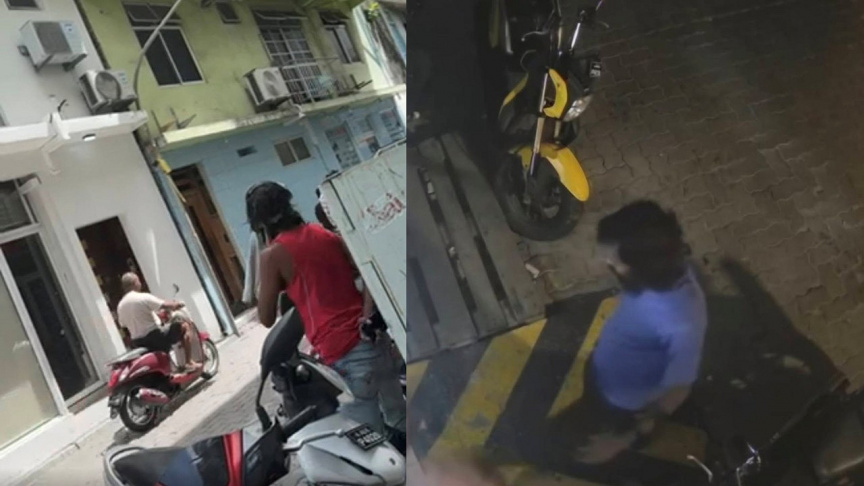
Screen grabs from CCTV footage of a man accused of terrorizing a neighborhood in Henveiru. (Video/Facebook/Mohamed Saeed)
About ten hours after a Male' city resident began a hunger strike at the Henveiru Police Station, claiming a long-running public nuisance case had gone unresolved for 1.5 years, the accused individual was arrested on Saturday evening.
Mohamed Saeed launched the hunger strike at 8:00 am, saying he had exhausted every formal avenue to seek protection for his family and neighborhood. In a Facebook post, he said a ‘drug-addicted’ man had been causing severe disturbance on Kashimaa Hingun and Dhoohimeri Magu for years, despite repeated reports to authorities.
According to Saeed, the man routinely shouted obscenities at pedestrians, used bicycles and road-closure boards to obstruct traffic, threw garbage at homes, and splashed oil and water from balconies onto people below. He also allegedly struck passers-by with plastic bottles, created loud disturbances from midnight until dawn, and entered residential buildings without permission.
Saeed said he and other residents had submitted evidence to the police multiple times, but “nothing has changed and institutions have failed to protect the people.” He said he would continue his hunger strike until a permanent solution is found.
When asked about the case, police said the accused has a family connection to Saeed, and that legal action has been taken each time a complaint was filed. They said the man had recently been remanded, but resumed disruptive behavior upon release. Police noted that while they receive numerous nuisance reports involving him, “you cannot always keep someone in custody,” adding that they will also review whether he has a drug-use record.
Saeed told Sun that the man was arrested around 6:30 pm on Saturday. However, he said the strike will continue. “My strike will not change. I will not stop. He has been arrested several times and released. This time I am not going to give up,” he said.
Internationally Certified Addiction Professional and Global Master Trainer Ali Adeeb also commented on the case, describing it as part of a wider systemic failure in addressing drug-use disorder. He said individuals suffering from chronic addiction require individualized care, and untreated cases often lead to unpredictable behavior that harms families and communities. Adeeb noted that thousands of similar cases exist nationwide due to gaps in enforcement, treatment, and inter-agency coordination, urging institutions to take responsibility.
Saeed said his demand is simple: safety for his family and for everyone who walks, rides, or drives on the affected roads. He said ensuring public safety is the duty of institutions, and he is asking them to fulfill that duty.